
How Do I Love Thee Libraries?
Let me count the ways

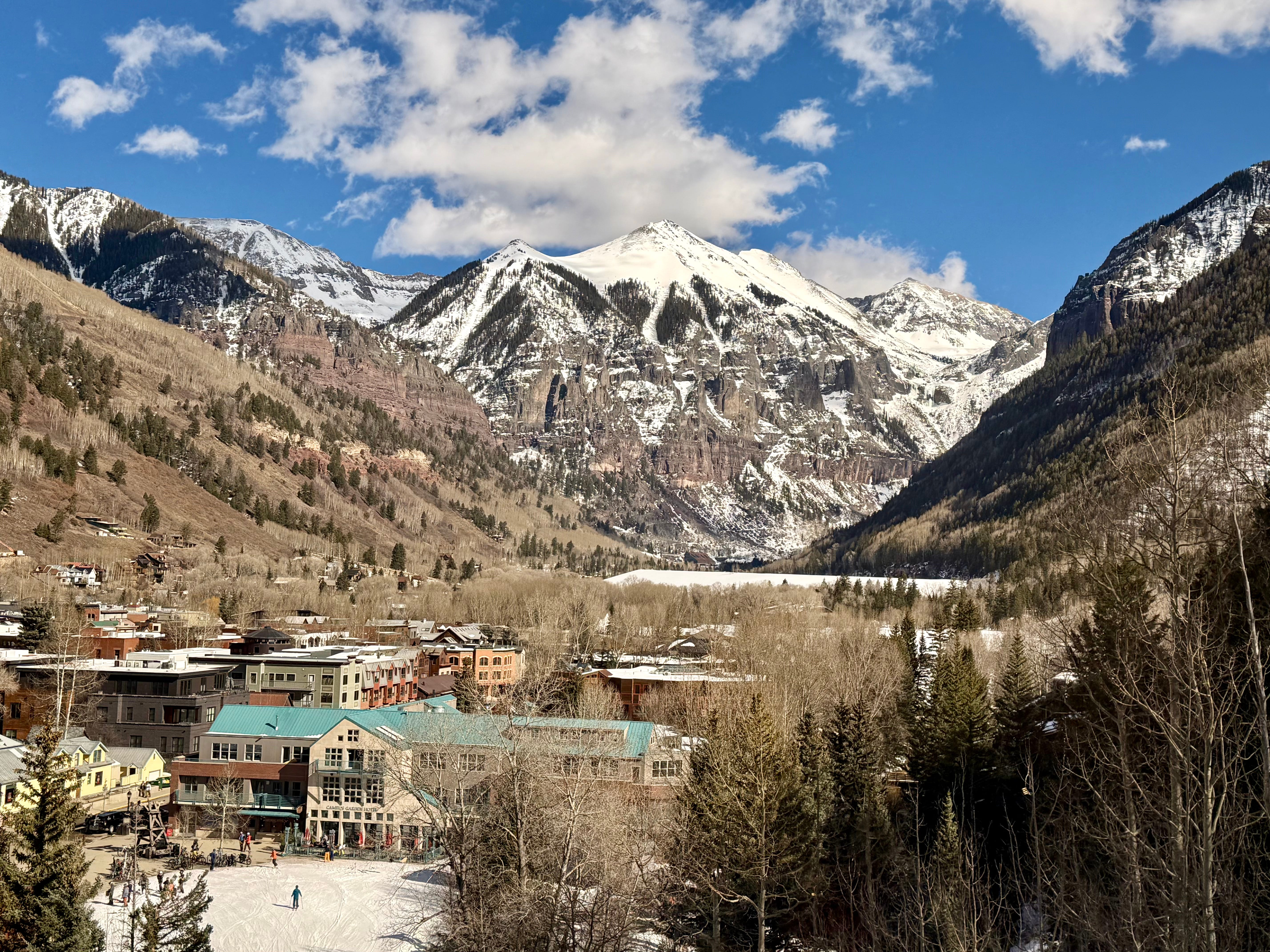
I spent the past week in a ski town called Telluride. It’s one of my most happy places, and as soon as we arrived we went to our favorite pizza place for dinner. While waiting for a table we chatted with the bartender, a young woman in her thirties. Within a few minutes we were both raving about the local library. The bartender gushed about how she borrows every sort of home appliance from the library, a dehydrater and breadmaker and mixer, and she loves taking her niece and nephew there, and sometimes it’s just nice to go inside and get warm. She goes to the library a couple times every week.
Talking with her reminded me that libraries are such a wonderful sanctuary. They are a place of refuge and safety, offering warmth and books and all sorts of social services. They are a place where the community can always gather together for free.
The next evening, while riding the free local shuttle bus, I chatted with a woman who had recently moved to Telluride and was so impressed with the library. She couldn’t believe they offered 100+ free classes every month, and she’d recently taken her dog to a puppy meetup at the library. The library was where she was meeting new friends and neighbors in her new hometown.
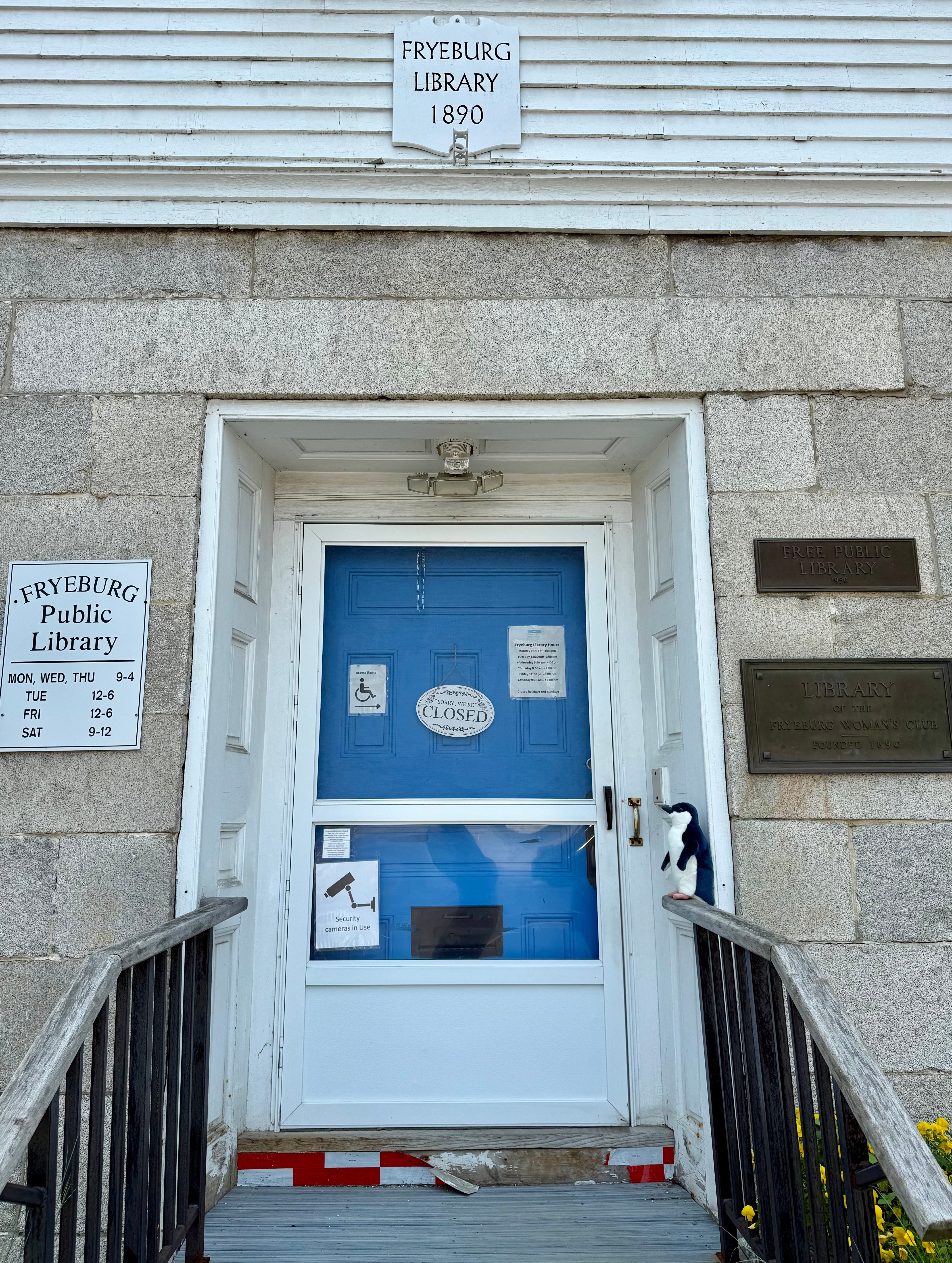
I smiled and thought about my little blue penguin - Victoria - that I take with me to all the libraries I visit. Little blue penguins congregate together in rafts in order to survive their predators. She’s an appropriate mascot for libraries, because libraries are where people congregrate around ideas and information and services. Libraries help people survive and thrive together. Victoria reminds me that penguin rafts and human sanctuaries don’t just happen, they have to intentionally be built.
Way back in the 1880s, Andrew Carnegie was one of the top five richest people in history. He was born to a very poor family in Scotland, but reinvented himself as a pioneer in the American steel industry. By age 33, he was one of the most successful entrepreneurs in America. And he happened to believe the wealthy had a moral obligation to use their money to support the greater good. And he so became a philanthropist, known as the patron saint of libraries. Between 1886 and 1919, he personally funded over 2,500 libraries worldwide. He believed libraries were essential for self-improvement, and he funded them to foster education and community growth. By the time he died, he’d given away 90% of his fortune, having established a community-based library movement across the country. One of the very richest of all Americans gave away his fortune to establish the modern public library system.
I grew up in a suburb of Columbus, Ohio, in a house that was only 400 yards from Lane Road Public Library. Our house was close enough that I could walk there unsupervised, any day I wanted. I spent so much of my childhood in that library, I can still draw the exact floorplan, and describe how the bookshelves on the first floor smelled slightly different from the bookshelves on the second floor. I have such fondness for that library that provided such calming serenity and peaceful solitude.
Now that I’m a self-employed writer, I travel a lot. I travel across America in an Airstream and I travel internationally with my passport. And everywhere I go, I try to visit the local library. Not because I need to check out any books, but because I want to check out the personality of the library. I like to understand its history, its architecture, its vibe and its services. I’ve become an anthropologist of libraries - I visit libraries the way other people visit museums.
I’ve been to brand new libraries in the middle of a shopping center (Conifer, CO) and very old historic buildings (Fryeburg, ME). I’ve seen very well funded libraries (Jackson, WY) and barely funded libraries (Rico, CO). I’ve seen amazing architecture (Steamboat Springs, CO) and very modern architecture (Dublin, OH). I’ve been to the library of Trinity College Dublin, built way back in 1592. Every time I visit a library now, I take Victoria with me and document our visit with photos of my public library mascot.
And everywhere we go, I pay attention to the details. Some libraries post their wifi password in all the windows, so that anyone can use the free wifi when they are closed. The library in Christchurch, New Zealand has amazing artwork displayed on every floor. Some libraries highlight local authors, while others offer free snacks and sometimes free books.
The personality of every library is a reflection of the community in which it exists. Which is why I love to peek inside and visit.
And then I let myself daydream that maybe someday, we could establish a national library passport system. Every library would have their own unique stamp and you could get your passport stamped whenever you visited a new library. Imagine if kids were itching to visit the library whenever they traveled somewhere new on vacation. Imagine if adults bragged about visiting a library in all 50 states.
What if libraries were the solution to the current epidemic of loneliness and disconnection? What if libraries became the new third place, where people turned off their devices and reconnected with their neighbors?
Back in 1731, Ben Franklin pioneered the subscription library as a way to foster democracy. He believed libraries contributed to a more informed society and “improved the general conversation of the Americans.” Ben Franklin and Andrew Carnegie decided that libraries were important for our country and so they invested their resources accordingly. What if we all decided to do the same thing again today in 2026?
I believe libraries have the potential to continue evolving, to strengthen our communities and our culture by bringing people together around books and ideas and social services. I’m imagining a world where libraries are the heart of every community, where libraries are truly a raft and a sanctuary for everyone. Not just in Telluride, but everywhere.
OK, you've convinced me that Eros and I should visit each Tulsa Library. We quite often go to the one closest to where I live but we need to expand. I love the different things the libraries do for the kids sections.
My knitting group typically meets on Saturdays at the library. I usually have a soccer or basketball game to attend so don't get to the Saturday sessions but I know the ladies appreciate having a place to meet.
You're right; libraries are more than books. They are sanctuaries, and classrooms, and community halls, and magic carpet rides. Thanks for the reminder.